An altcoin, short for "alternative coin," is any cryptocurrency other than Bitcoin. The term emerged after the success of Bitcoin, the first and most well-known cryptocurrency, as other digital currencies began to appear.
There are thousands of altcoins in existence today, each with its own unique features and purposes. Some altcoins are designed to be faster and more scalable than Bitcoin, while others aim to provide new functionalities, such as smart contracts or privacy features.

Here's a breakdown of the term "altcoin":
Therefore, altcoin literally translates to "alternative cryptocurrency”.
Types of Altcoins
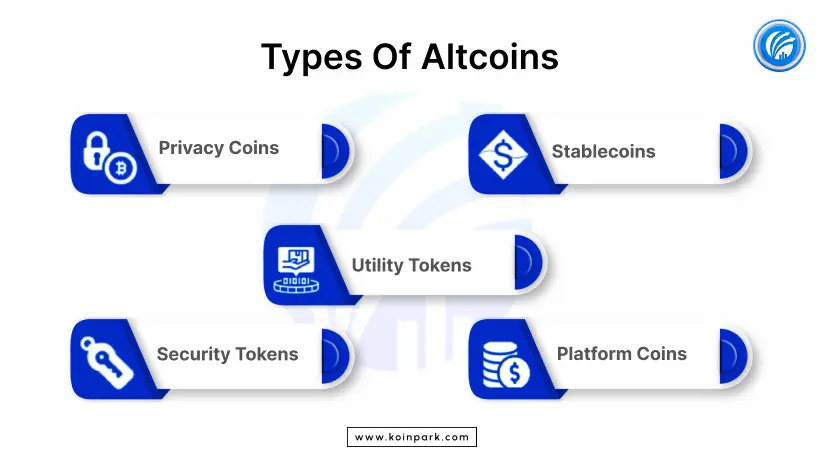
Altcoins come in various cryptocurrency types and serve different purposes within the blockchain ecosystem. Here's a breakdown of some common categories of altcoins along with examples:
1. Privacy Coins: Privacy coins focus on enhancing anonymity and confidentiality in transactions. They offer features to obscure transaction details such as sender, recipient, and amount.
- Monero (XMR): Known for its strong privacy features like ring signatures and stealth addresses, Monero aims to provide untraceable transactions.
- Zcash (ZEC): Zcash offers both transparent and shielded transactions, allowing users to choose between privacy and transparency.
2. Stablecoins: Stablecoins are cryptocurrencies designed to minimize price volatility by pegging their value to external assets like fiat currencies, commodities, or other cryptocurrencies.
- Tether (USDT): Tether is pegged to the US dollar, aiming to maintain a 1:1 value ratio. It's widely used for trading and as a stable store of value.
- USD Coin (USDC): Another stablecoin pegged to the US dollar, USDC is regulated and audited regularly to maintain transparency.
3. Utility Tokens: Utility tokens provide access to a specific product or service within a blockchain ecosystem. They are often used for governance, access rights, or as a means of payment within a platform.
- Ethereum (ETH): While often considered a cryptocurrency, Ethereum's native token ETH is primarily a utility token. It fuels transactions and smart contracts on the Ethereum network.
- Binance Coin (BNB): Initially launched as a utility token for discounted trading fees on the Binance exchange, BNB has expanded its utility to various services within the Binance ecosystem.
4. Security Tokens: Security tokens represent ownership of assets such as real estate, stocks, or commodities. They offer legal rights and are subject to securities regulations.
- Polymath (POLY): Polymath provides a platform for issuing security tokens compliant with regulatory requirements. It aims to simplify the process of creating and managing security tokens.
- tZERO (TZROP): tZERO is a security token representing ownership in the tZERO trading platform. It offers investors the opportunity to trade digital securities in compliance with regulations.
5. Platform Coins: Platform coins are native tokens of blockchain platforms that enable developers to build decentralized applications (dApps) and execute smart contracts.
- Cardano (ADA): Cardano is a blockchain platform that aims to provide a more secure and scalable infrastructure for the development of smart contracts and dApps.
- Solana (SOL): Solana is known for its high throughput and low transaction fees, making it suitable for building decentralized applications and deploying scalable projects.
Use Cases and Adoption of Altcoins
Real-world Applications
Beyond investment, altcoins offer various real-world applications, including:
- Remittances: Altcoins like Stellar Lumens (XLM) facilitate faster, cheaper, and more transparent cross-border payments compared to traditional remittance services.
- Decentralized Finance (DeFi): DeFi applications, built on blockchain technology like Ethereum, allow users to access financial services like lending, borrowing, and trading without relying on traditional intermediaries. Specific altcoins like Uniswap (UNI) are crucial components of the DeFi ecosystem.
- Gaming: The rise of play-to-earn games, where players can earn tokens through gameplay and in-game activities, has created new use cases for altcoins like Axie Infinity (AXS). These tokens can be used within the game or traded for other currencies.
- Supply Chain Management: Altcoins like VeChain (VET) offer solutions for tracking and verifying the movement of goods in a supply chain, improving transparency and efficiency.
Adoption
The adoption of altcoins is still evolving. While not widespread, there are notable examples of businesses, consumers, and institutions embracing them:
- Businesses: Some businesses are accepting altcoins as payment, with companies like Microsoft and Starbucks accepting specific tokens for purchases.
- Consumers: While not yet mainstream, a growing number of consumers are using altcoins for online purchases and exploring DeFi applications.
- Institutions: Major financial institutions like Fidelity Investments and BlackRock are exploring ways to offer exposure to cryptocurrencies, including altcoins, to their clients.
Partnerships and Integrations
Several partnerships and integrations are showcasing the potential of altcoin adoption:
- Visa partnered with Chainlink (LINK) to explore integrating blockchain oracles into their network.
- Mastercard announced a collaboration with Circle, the issuer of the USDC stablecoin, to enable crypto payments for merchants.
- IBM is working with Stellar Development Foundation to explore using XLM for cross-border payments.
- It's important to note that altcoin adoption is still in its early stages, and these are just some initial steps. Regulatory frameworks and public perception will play a significant role in determining the future of altcoin adoption across different sectors.
Investing in Altcoins
Market Analysis
- Market Capitalization: The total market capitalization of all altcoins combined is currently significantly smaller than Bitcoin's. However, the altcoin market is growing rapidly, and some individual altcoins have achieved substantial market caps.
- Trading Volume: The trading volume of altcoins can be highly volatile and often follows trends in the Bitcoin market. While some altcoins have high trading activity, others may be less liquid, making it difficult to buy or sell them quickly.
- Trends: The altcoin market is constantly evolving, with new projects and technologies emerging all the time. Some recent trends include the rise of decentralized finance (DeFi) and non-fungible tokens (NFTs), which have fueled growth in specific altcoin sectors.
Investment Strategies
- Long-term holding (HODLing): This strategy involves buying and holding altcoins for an extended period, believing in their long-term potential. It requires a strong understanding of the project and the underlying technology.
- Swing trading: This strategy aims to profit from short-term price fluctuations in altcoins by buying low and selling high within days or weeks. It requires active monitoring of the market and technical analysis skills.
- Day trading: This strategy involves buying and selling altcoins within a single day, capitalizing on intraday price movements. It's a highly risky approach, requiring extensive experience, knowledge, and emotional discipline.
Bottom Line
In conclusion, altcoins represent a diverse and dynamic aspect of the cryptocurrency landscape, offering innovative solutions and expanding possibilities beyond Bitcoin. With blockchain technology as their foundation, altcoins utilize diverse consensus mechanisms and enable the execution of smart contracts, fostering decentralization, security, and programmability.
While facing challenges such as regulatory uncertainty and technological scalability, altcoins continue to drive innovation and adoption in finance, technology, and beyond. As the cryptocurrency market evolves, altcoins are poised to play an increasingly significant role, shaping the future of digital finance and decentralized applications.
Stay informed with our cryptocurrency exchange platform, explore opportunities, and embrace the potential of altcoins in this ever-changing ecosystem. Download our cryptocurrency exchange app to buy bitcoin and altcoins.